As the web site says ‘£50,000 is needed to help make this a
reality. By donating to the #YourStamp campaign, you can directly support one
of the remaining 433 stamps on the original sheets as they wind their way
across the pond. Help get this inspiring British story in front of an expected
international audience of 250,000 stamp collectors from beginners to
enthusiasts and in turn, promote the history of GB philately and help secure
growing interest its future’
News and comment on visitor attractions, museums, heritage, destination management and tourism
Saturday, 16 April 2016
The Stamps that Changed The World
Tuesday, 5 January 2016
Future trends?
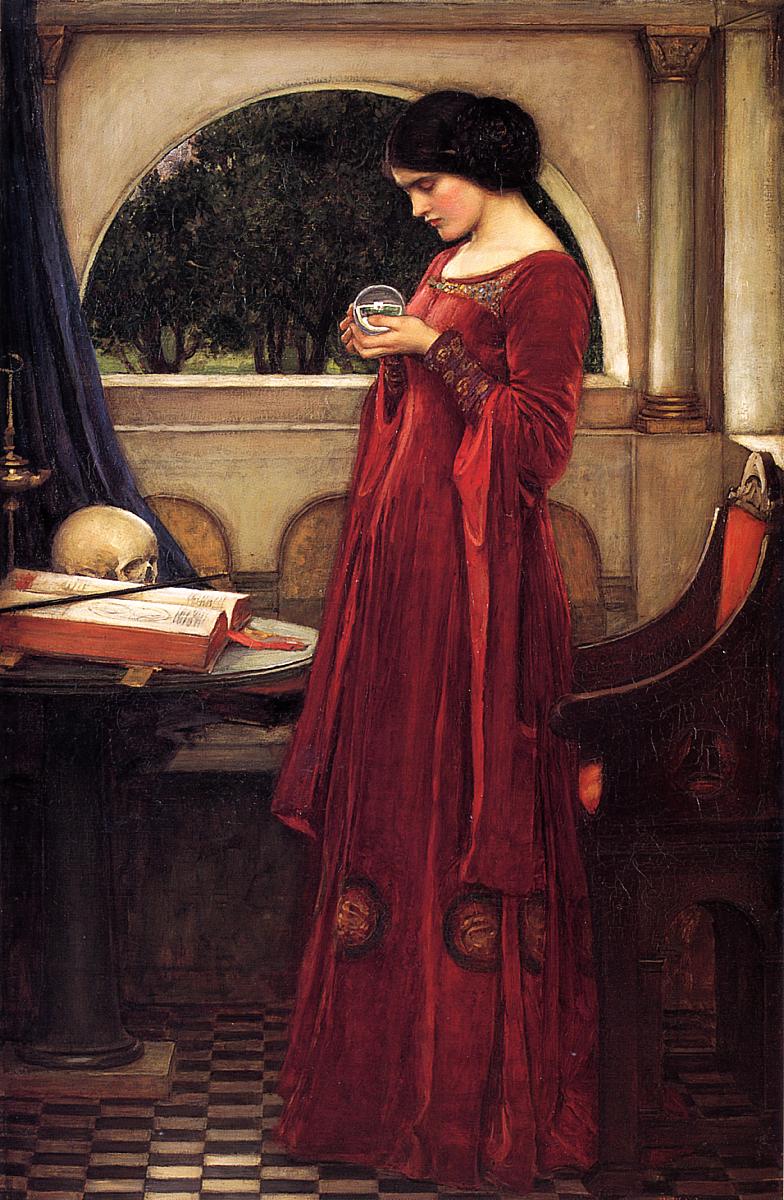
| The Crystal Ball - J W Waterhouse |
Their number 1 is ‘Underground Attractions’ and they use as
examples, Iceland’s ‘Into the Glacier’, ‘Bounce Below’ in Wales, where you can
trampoline in a slate quarry and ‘Zip World Caverns’ where ‘daredevil tourists’
can go on zip wires and an assault course underground. My own slightly more
sedate example but still exciting will be the 20 minute ride on Mail Rail
opening in London in 2017 as part of the £25 million Postal Museum project, that
plays on the idea of underground secret tunnels, heritage and an immersive ride.
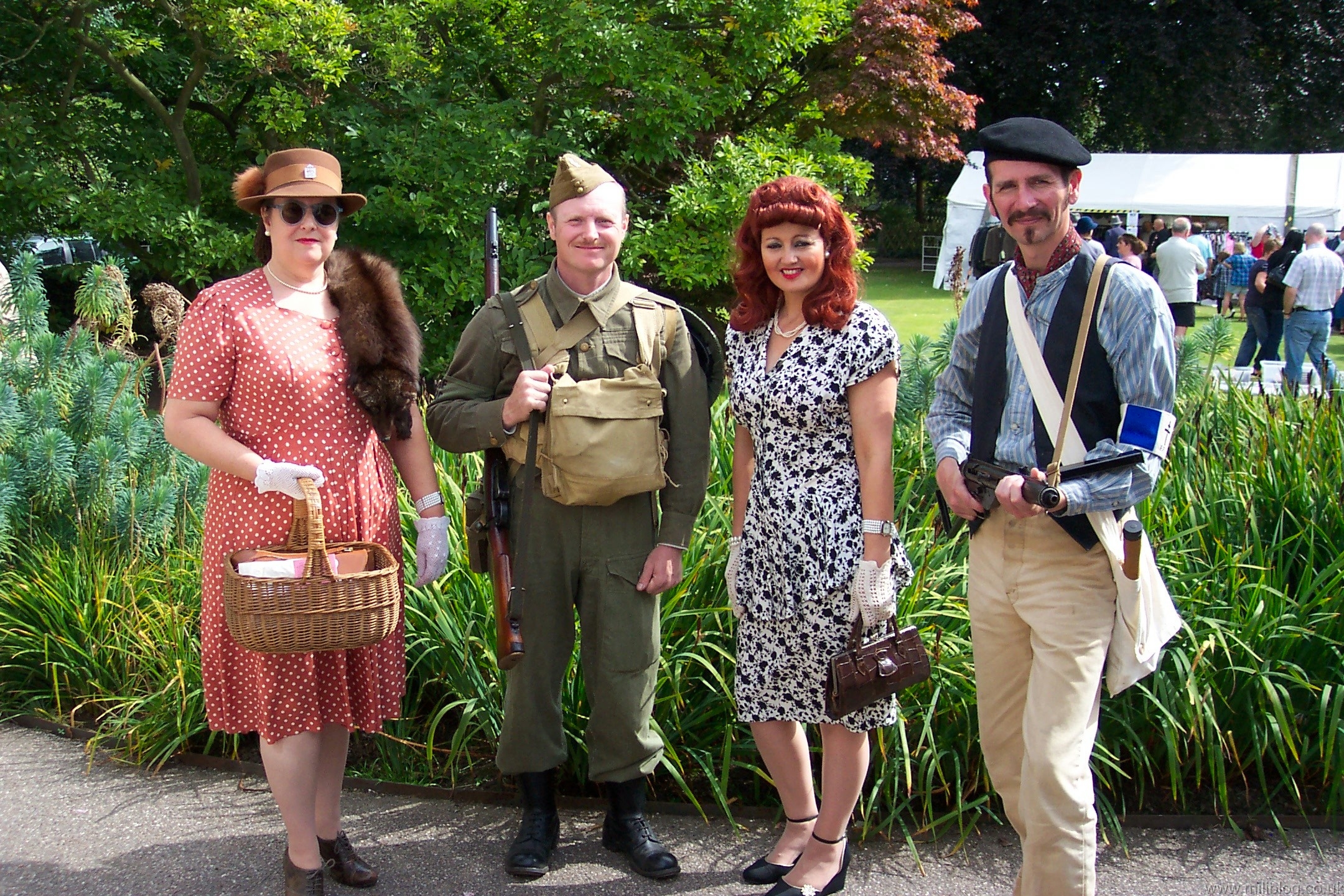
Number 3 is ‘Vintage’
with visitors dressing up for themed rides – they quote the
revamp of the New
York State Fair and the reopening of Dreamland at Margate . I’m not sure this is quite so new as
they think – the outdoor museums at Beamish and Ironbridge have trod this
particular path for years quite apart from
the themed events on the UK ’s
heritage railways covering WW2, 1930s, 1940s,1950s et al.
| 1940s re-enactors see miliblog.co.uk |
Two perhaps potentially sensitive ones are number 5 - 'Dementia Friendly Design' ‘and number 6
– ‘Design for
Obesity’ or as their
headline says ‘Fat Planet’. The dementia friendly design approach is of course
just a further step on the access issue eg having typography that is readable
even for those with limited sight or even blind ie having Braille and having
well thought out and intelligent use of colours and patterns so as not to
confuse visitors. They quote the example of the ‘stick man’ and ‘stick woman’, frequently used for lavatories. If you cannot
remember what they mean, then they are not a lot of help! Mind you even I have
had a problem with some of the more arcane examples of stick people.
| See carehome.co.uk |
Obesity is a major issue in the developed world and
Attractions Management expect to find
that attractions are increasingly catering for two distinct groups – obese
domestic and non obese tourist groups. The issue of over weight and large
visitors is an issue for all kinds of attractions impacting on such things as
seating, toilet cubicles, wider corridors and access in older heritage
buildings and places where the original occupants and users were smaller and
shorter anyway than the normal healthy 21st century adult.
Number 8 is ‘Invisibles’ -
sensors are integrated into the body to give a continuous data stream and
establish a complete picture of what is going with our responses..…this will
remove ‘the need to carry clunky devices’. This seems to be a variation on
their number 2 of ‘Customisation’ or
‘Feedback’ for rides where riders can influence their experience through
their breathing and heart rates.
Number 11 is ‘Africa ’ a continent which ‘will show exciting growth
over the next two decades, with the attractions industry ….as a driver for both
domestic and inbound tourism.’ Indeed
many countries in Africa have the assets to be potentially very wealthy with a
vibrant domestic and inbound tourism industry, Nigeria ,
South Africa and the Congo being
just three. But there are many issues to be tackled in for example geopolitics
and economic development before I would put my money on this forecast.
No 12 is ‘Halal’
- Muslims spent US$149bn on international travel in 2013. AM forecast ‘further segregation in design
and in facilities…as the growth of halal tourism picks up pace.’ Quite how
Western audiences brought up in the Judeo-Christian tradition may react to this
in an attraction will be difficult to determine.
| See arcapplause.com |
No 13 is ‘Beacons’
- the technology is about to change the
way we look at attractions and open up opportunities for enhanced experience
design and (of course!) increased monetisation. Mind you I recall reading some
10 years ago, about the ability to send information to customers as they walk
past certain hotspots – maybe modern technology and the ubiquity of mobile
device will allow it to finally happen…
No 17 is ‘Tech
backlash’ – essentially we will be come fed up with digital technology and
visitors ‘will increasingly want to express themselves as sentient, physical, social beings’. Yes me
to – I’ve always be averse to walking around a museum or attraction with an
electronic gadget held to my ear and some disembodied voice telling me what I
should be looking at.
No 19 is ‘Retail Customisation’
and we are here already of course with ‘photo books,
3D printing etc and with
products tailored to individual customers. This is a development of the concept
developed by Chris Anderson in ‘The Long Tail’ published in 2006 – ‘How endless
choice is creating unlimited demand’ and brilliantly executed by the likes of
Amazon and Ebay where technology has created the ‘market of one individual’. Royal
Mail has been doing this for a while now with Smilers® - customised stamps which include your own
photo that you can buy on line and with a mobile app and special machines .
| Royal Mail Group |
So those are just some of the Top 20 potential trends for
all those who work in the attractions industry to be aware of and perhaps react
to…
Thursday, 28 May 2015
RAF Museum signs MOU with Pembroke Dock Sunderland Trust
Attract's client The Pembroke Dock Sunderland Trust has established an excellent link:
The Royal
Air Force Museum is proud to announce its official association with the Pembroke
Dock Sunderland Trust
Today a
Memorandum of Understanding (MOU) was formally signed between the Royal Air
Force Museum and the Pembroke Dock Sunderland Trust (PDST) in the presence of
the Museum’s CEO Maggie Appleton MBE and PDST Chairman, William
McNamara, OBE.
The MOU
will see the RAF Museum and Pembroke Dock
Sunderland Trust establish a partnership to foster
the interests of both parties through collaborative programmes and events. It
will also offer professional development for staff, apprentices and volunteers
and develop opportunities for complementary fundraising.
![]() |
| Pembroke Dock Sunderland Trust Chairman William McNamara and RAF Museum CEO Maggie Appleton |
RAF
Museum CEO Maggie Appleton says: “The
Trustees and team of the Royal Air Force Museum are delighted to have the
opportunity to work with the Pembroke Dock Sunderland Trust. As a National
Museum we see it as our responsibility to share our expertise and experience
with other organisations and equally look forward to learning from them. This
arrangement will enable staff from both organisations to develop relationships
as well as provide a substantial legacy for our respective local communities. We
look forward to this important collaboration and to working with our new
partner.”
Pembroke Dock
Sunderland Trust Chairman William McNamara added: “Pembroke
Dock’s military heritage includes very important maritime aviation chapters
which feature at our Heritage Centre. Our new partnership with RAFM is an
important milestone for us. It is an exciting prospect for all involved in the
Sunderland Trust - trustees, staff and our skilled and dedicated volunteer team
- to be able to work in collaboration with the national aviation museum.
Pembroke Dock Sunderland Trust will be able to benefit in so many ways from this
partnership and we look forward to a prosperous and beneficial future on many
projects.”
Picture caption (left
to right): Pembroke Dock
Sunderland Trust Chairman William McNamara and RAF
Museum CEO Maggie Appleton
Monday, 8 December 2014
Get a Growth Voucher for strategic advice
The Growth Vouchers programme delivers support for up to
20,000 small businesses in England ,
focussing on small businesses who have never sought business advice before.
Businesses looking for advice apply to the programme online and they are randomly assigned to an online questionnaire or face-to-face business advice
assessment.
Some businesses will be randomly chosen to get a voucher for up to £2,000 to help pay for business support in one of the specialist areas. You’ll have to match the amount with your own funds.
You can then find a Growth Voucher adviser eg Nick Booker of Attract Marketing, to work with on the Enterprise Nation Marketplace; you then pay for the services in full and request 50% back from the government. You download a claim form to claim a subsidy for business advice as awarded in your Growth Voucher offer.
Click here to find out more
Some businesses will be randomly chosen to get a voucher for up to £2,000 to help pay for business support in one of the specialist areas. You’ll have to match the amount with your own funds.
You can then find a Growth Voucher adviser eg Nick Booker of Attract Marketing, to work with on the Enterprise Nation Marketplace; you then pay for the services in full and request 50% back from the government. You download a claim form to claim a subsidy for business advice as awarded in your Growth Voucher offer.
The Growth Vouchers programme is available to small
businesses in England
who are actively selling goods and/or services, have a turnover no greater than
£45m, own 75% or more of their business, and have 250 employees or less.
Click here to find out more
Thursday, 4 December 2014
On Line Reviews TripAdvisor et al
![]() |
| Photo Credit: Alex E. Proimos via Flickr Creative Commons |
Online reviews are having a huge
impact on service businesses says an article in the latest edition of the excellent
Attractions Handbook. Although few attraction operators
have embraced them to the degree seen in
the hotel and restaurant sectors, the opportunity is there to increase business
by encouraging and managing reviews across all areas of leisure, including
attractions.
A study by economists at the University of California ,
Berkeley found
a variance of just half a star rating can determine whether a service business
grows and thrives or goes bust. Researchers focused on restaurant reviews on
Yelp.com and found that the difference between 3 and 3.5 stars increased the
chance of a business reaching capacity at peak times from 13 per cent to as
much as 34 per cent.
Further reinforcement of the
impact comes from a TripAdvisor study which found that properties with 11
reviews or more on the website see a 28 per cent rise in user engagement when
compared to those with 10 or fewer.
Dealing well with complaints
relating to online reviews is also important, according to a report from PhoCusWright
the travel research and analysis company. They
found that 84 per cent of TripAdvisor users said an appropriate management response
to a bad review improves their impression of a hotel or restaurant.
In the attractions industry,
monitoring reviews can act as a feedback loop for complaints, while managing them
helps to neutralise the impact of bad reviews which have been shared by
consumers. As more attractions build hotels, spas and restaurants, managing
these reviews also becomes an important part of the reputation management of
the operation.
Source: Attractions Handbook
Wednesday, 20 August 2014
Museum Retail Therapy Visits
The series of retail workshops run by Museums Warwickshire earlier this year highlighted
the desire for an informal network of those involved with museum shops. As a precursor a series of visits to West Midlands museum shops is being arranged. Details click here
Monday, 18 August 2014
Running Events and Publicising Your Shop
As the Introduction states, 'hosting events in store, whether they include an author or not, is a proven method of reaching your community effectively' (I'd say market!) 'and is an ideal way of making sure potential customers find out about you, and come back again and again.'
'Successful events are an ideal way to create and build links with all sorts of new markets, from schools for all age groups, book clubs, local businesses and community groups' and of course for museums and other attractions, the local visitor market. These links can lead to a number of further marketing opportunities.
'Once you’ve worked out which events work well for your store, you’ll find it easier to promote them and will get an even better turnout. And this in turn will lead to extra sales and turnover: something we are all looking for!'
So have a look at 'Books are My Bag' here and thank you to Midas PR for an excellent guide to setting up 'instore' or should it be 'inshop' (?) events.
Subscribe to:
Posts (Atom)


_0.jpg)