Monday, 17 July 2017

False starts and dashed hopes


We sometimes forget that project mismanagement, lack of clarity in aims and capital overspends are not just recent phenomena in major capital projects. In  ‘Ghosts of Aberglaslyn’ - False Starts and Dashed Hopes - the brief life of The Portmadoc, Beddgelert and South Snowdon Railway, John Manners and Michael Bishop examine the project that might have put a network of electric railways through Snowdonia but that ultimately foundered in a miasma of  political manoeuvrings, personalities, dashed hopes, obstructionism and obsolescent technology as well as '...lack of clarity in aims and capital overspends...'
 
‘Ghosts of Aberglaslyn’ tells the amazing story of an electric railway project in North Wales that was never completed, involving a predecessor of Parsons Peebles, the Rosyth based electrical engineering company, Sir Thomas Beecham, the inventor of Beechams Pills and father of the famous orchestra conductor, a Hungarian locomotive builder and the great great grandfather of the late Tara Palmer Tomkinson, the English socialite, "it girl", television presenter, model and charity patron.

Some of the line was constructed between 1901 and 1909, but it never opened and the track bed eventually became part of the Welsh Highland Railway. . If the aspirations of the promoters of the Portmadoc, Beddgelert & South Snowdon Railway (PBSSR) had been realised, electric trains might now be carrying passengers between Porthmadog and Caernarfon in North Wales

‘Ghosts of Aberglaslyn’ has 120 pages of text and a rich collection of photographs, including several published for the first time. It’s available direct from the publisher, the Welsh Highland Railway Heritage Group at www.welshhighlandheritage.co.uk/sales.html for £18 post paid in the UK or via your local bookshop quoting:ISBN number 978-0-9930821-4-6

Wednesday, 1 February 2017

Shire Hall Dorchester - Justice in the Balance


© Copyright Roger Templeman Creative Commons Licence


Dorchester’s Shire Hall is a rare architectural gem and one of the best-preserved buildings of its kind, remaining almost unchanged since it first opened in 1796/7.
 
A centre of law, order and government for over 200 years - Shire Hall was a place where all sectors of society interacted. The trial of the Tolpuddle Martyrs  took place here in 1834 and changed the course of history and helped to shape the society in which we live today. Later, the writer Thomas Hardy served as a magistrate at the court, an experience which inspired some of his writing.
 
A project grant has been secured from the Heritage Lottery fund of £1.5 million that West Dorset District Council has match-funded. The aim of the project is to renovate and re-use the Shire Hall building and its Old Crown Court and cells as a heritage attraction and centre for learning that will encompass many aspects of law, politics, citizenship and history. In addition to creating a visitor attraction within the historic parts of the building, the refurbishment project will provide a new gallery for temporary exhibitions, a learning room, a shop and a café.
 
The marketing strategy and plan will place Shire Hall - Justice in the Balance Visitor Centre at the heart of Dorset’s tourist offer by building a coherent and cohesive offer that works with partner organisations, attractions potential partners and linkages (e.g. for trails). 
 
The strap line ‘Justice in the Balance’ will play a key role in differentiating the Centre within the overall tourist offer and in all marketing communications.
 

Wednesday, 20 July 2016

Milton Abbey Heritage Lottery Fund Successful Round 2 Bid

Attract Marketing delivered the Business Plan and marketing appraisal / marketing plan part of the successful  Round 2 HLF bid for over £1.2 million for Milton Abbey in Dorset. The aim of the project is to conserve and restore Milton Abbey Church and the associated Capability Brown landscape; encourage greater participation of the local community; generate an increase in visitor numbers; ensure future sustainability. We wish the Diocese of Salisbury, Tom Roberts and the project team well in implementing this fantastic and exciting project 
Milton Abbey Dorset successful HLF bid
Milton Abbey Dorset - Tim Mercer

Saturday, 16 April 2016

The Stamps that Changed The World

Penny Black the stamps that changed theworld


The Postal Museum’s campaign to take the revolutionary and iconic Penny Black and Two-penny Blue registration sheets abroad for the first time in their 175 year history. British stamps abroad for the first time - making it possible to share this truly great innovation and British success story with the world

As the web site says ‘£50,000 is needed to help make this a reality. By donating to the #YourStamp campaign, you can directly support one of the remaining 433 stamps on the original sheets as they wind their way across the pond. Help get this inspiring British story in front of an expected international audience of 250,000 stamp collectors from beginners to enthusiasts and in turn, promote the history of GB philately and help secure growing interest its future’

Tuesday, 5 January 2016

Future trends?

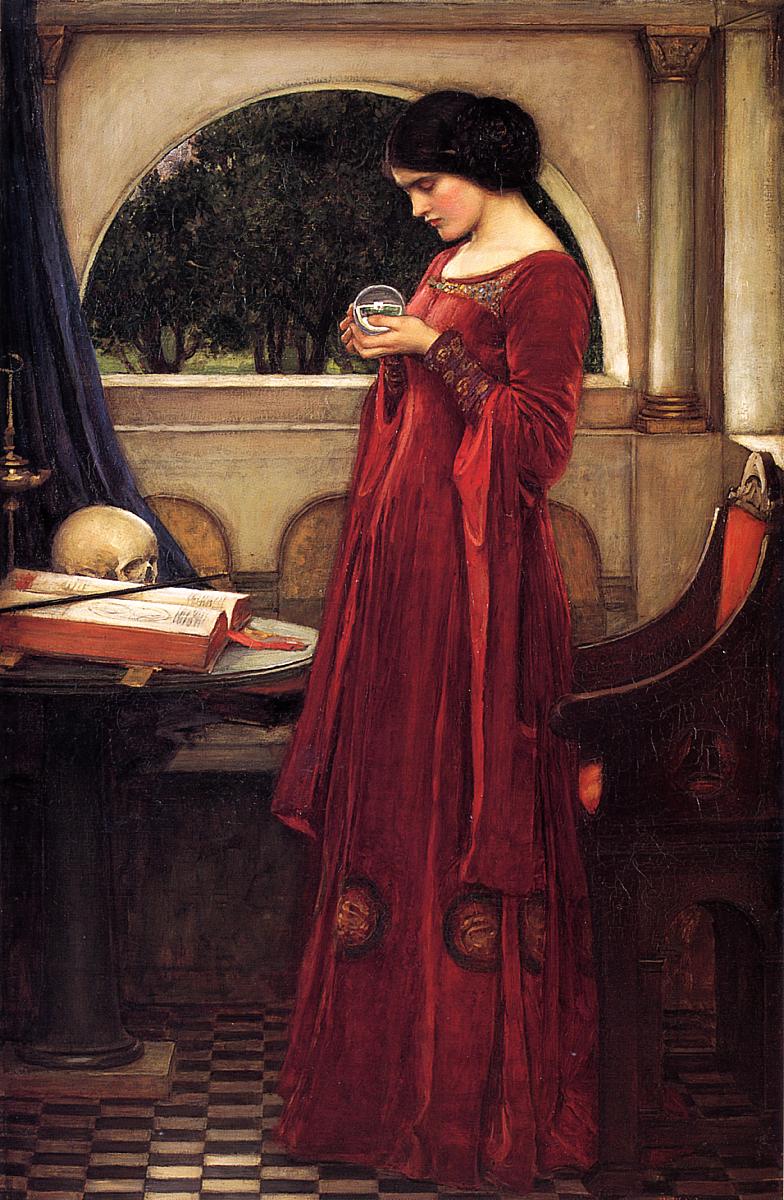
The Crystal Ball
- J W Waterhouse
The latest copy of the Attractions Management Year Book (AM)  thumped onto my door mat over the Christmas period and the lead article is ‘Attractions Foresight’ where they look at the top 20 trends that they think will shape the future for attractions and tourism. I’ve picked out those that ‘tickle my fancy’ or I like or I can say this is something of which I have personal experience. 

Their number 1 is  Underground Attractions’ and they use as examples, Iceland’s ‘Into the Glacier’, ‘Bounce Below’ in Wales, where you can trampoline in a slate quarry and ‘Zip World Caverns’ where ‘daredevil tourists’ can go on zip wires and an assault course underground. My own slightly more sedate example but still exciting will be the 20 minute ride on Mail Rail opening in London in 2017 as part of the £25 million Postal Museum project, that plays on the idea of underground secret tunnels, heritage and an immersive ride. 

Number 3 is ‘Vintage’ with visitors dressing up for themed rides – they quote the 
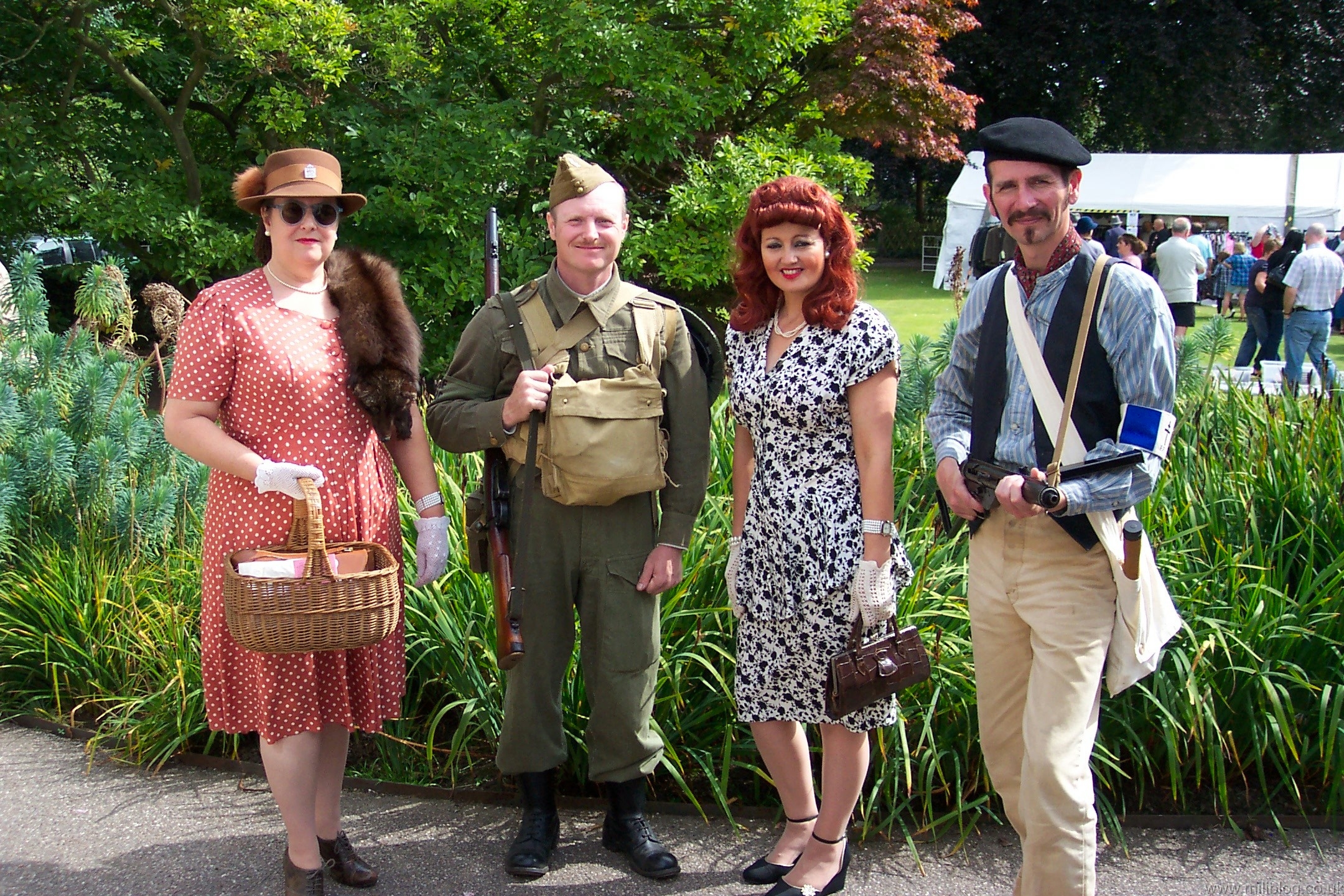
1940s re-enactors see miliblog.co.uk
revamp of the New York State Fair and the reopening of Dreamland at Margate. I’m not sure this is quite so new as they think – the outdoor museums at Beamish and Ironbridge have trod this particular path for years quite apart from  the themed events on the UK’s heritage railways covering WW2, 1930s, 1940s,1950s et al.
 

Two perhaps potentially sensitive ones are number 5 - 'Dementia Friendly Design' and number 6 – ‘Design for
See carehome.co.uk
Obesity’
or as their headline says ‘Fat Planet’. The dementia friendly design approach is of course just a further step on the access issue eg having typography that is readable even for those with limited sight or even blind ie having Braille and having well thought out and intelligent use of colours and patterns so as not to confuse visitors. They quote the example of the ‘stick man’ and ‘stick woman’,  frequently used for lavatories. If you cannot remember what they mean, then they are not a lot of help! Mind you even I have had a problem with some of the more arcane examples of stick people.
 

Obesity is a major issue in the developed world and Attractions Management expect to find that attractions are increasingly catering for two distinct groups – obese domestic and non obese tourist groups. The issue of over weight and large visitors is an issue for all kinds of attractions impacting on such things as seating, toilet cubicles, wider corridors and access in older heritage buildings and places where the original occupants and users were smaller and shorter anyway than the normal healthy 21st century adult.

Number 8 is ‘Invisibles’   - sensors are integrated into the body to give a continuous data stream and establish a complete picture of what is going with our responses..…this will remove ‘the need to carry clunky devices’. This seems to be a variation on their number 2 of ‘Customisation’ or ‘Feedback’ for rides where riders can influence their experience through their breathing and heart rates.

Number 11 is Africa a continent which ‘will show exciting growth over the next two decades, with the attractions industry ….as a driver for both domestic and inbound tourism.’  Indeed many countries in Africa have the assets to be potentially very wealthy with a vibrant domestic and inbound tourism industry, Nigeria, South Africa and the Congo being just three. But there are many issues to be tackled in for example geopolitics and economic development before I would put my money on this forecast.

No 12 is ‘Halal’ - Muslims spent US$149bn on international travel in 2013.  AM forecast ‘further segregation in design and in facilities…as the growth of halal tourism picks up pace.’ Quite how Western audiences brought up in the Judeo-Christian tradition may react to this in an attraction will be difficult to determine.

See arcapplause.com
No 13 is ‘Beacons’  - the technology is about to change the way we look at attractions and open up opportunities for enhanced experience design and (of course!) increased monetisation. Mind you I recall reading some 10 years ago, about the ability to send information to customers as they walk past certain hotspots – maybe modern technology and the ubiquity of mobile device will allow it to finally happen…

No 17 is ‘Tech backlash’ – essentially we will be come fed up with digital technology and visitors ‘will increasingly want to express themselves  as sentient, physical, social beings’. Yes me to – I’ve always be averse to walking around a museum or attraction with an electronic gadget held to my ear and some disembodied voice telling me what I should be looking at.

No 19 is ‘Retail Customisation’ and we are here already of course with ‘photo books,
Royal Mail Group
3D printing etc and with products tailored to individual customers. This is a development of the concept developed by Chris Anderson in ‘The Long Tail’ published in 2006 – ‘How endless choice is creating unlimited demand’ and brilliantly executed by the likes of Amazon and Ebay where technology has created the ‘market of one individual’. Royal Mail has been doing this for a while now with Smilers®  - customised stamps which include your own photo that you can buy on line and with a mobile app and special machines .

So those are just some of the Top 20 potential trends for all those who work in the attractions industry to be aware of and perhaps react to…


Thursday, 28 May 2015

RAF Museum signs MOU with Pembroke Dock Sunderland Trust

Attract's client The Pembroke Dock Sunderland Trust has established an excellent link:

The Royal Air Force Museum is proud to announce its official association with the Pembroke Dock Sunderland Trust

Today a Memorandum of Understanding (MOU) was formally signed between the Royal Air Force Museum and the Pembroke Dock Sunderland Trust (PDST) in the presence of the Museum’s CEO Maggie Appleton MBE and PDST Chairman, William McNamara, OBE.

The MOU will see the RAF Museum and Pembroke Dock Sunderland Trust establish a partnership to foster the interests of both parties through collaborative programmes and events. It will also offer professional development for staff, apprentices and volunteers and develop opportunities for complementary fundraising.


RAF Museum
Pembroke Dock Sunderland Trust Chairman William McNamara and RAF Museum CEO Maggie Appleton

RAF Museum CEO Maggie Appleton says: “The Trustees and team of the Royal Air Force Museum are delighted to have the opportunity to work with the Pembroke Dock Sunderland Trust. As a National Museum we see it as our responsibility to share our expertise and experience with other organisations and equally look forward to learning from them. This arrangement will enable staff from both organisations to develop relationships as well as provide a substantial legacy for our respective local communities. We look forward to this important collaboration and to working with our new partner.”

Pembroke Dock Sunderland Trust Chairman William McNamara added: “Pembroke Dock’s military heritage includes very important maritime aviation chapters which feature at our Heritage Centre.  Our new partnership with RAFM is an important milestone for us. It is an exciting prospect for all involved in the Sunderland Trust - trustees, staff and our skilled and dedicated volunteer team - to be able to work in collaboration with the national aviation museum. Pembroke Dock Sunderland Trust will be able to benefit in so many ways from this partnership and we look forward to a prosperous and beneficial future on many projects.”
 
Picture caption (left to right): Pembroke Dock Sunderland Trust Chairman William McNamara and RAF Museum CEO Maggie Appleton


Monday, 8 December 2014

Get a Growth Voucher for strategic advice

Enperprise Nation
The Growth Vouchers programme delivers support for up to 20,000 small businesses in England, focussing on small businesses who have never sought business advice before. Businesses looking for advice apply to the programme online and they are randomly assigned to an online questionnaire or face-to-face business advice assessment.

Some businesses will be randomly chosen to get a voucher for up to £2,000 to help pay for business support in one of the specialist areas. You’ll have to match the amount with your own funds.

You can then find a Growth Voucher adviser eg Nick Booker of Attract Marketing,  to work with on the Enterprise Nation Marketplace; you then pay for the services in full and request 50% back from the government.  You download a claim form to claim a subsidy for business advice as awarded in your Growth Voucher offer.

The Growth Vouchers programme is available to small businesses in England who are actively selling goods and/or services, have a turnover no greater than £45m, own 75% or more of their business, and have 250 employees or less.

Click here to find out more

Thursday, 4 December 2014

On Line Reviews TripAdvisor et al


impact of good reviews
Photo Credit: Alex E. Proimos via Flickr Creative Commons
Online reviews are having a huge impact on service businesses says an article in the latest edition of the excellent Attractions Handbook. Although few attraction operators  have embraced them to the degree seen in the hotel and restaurant sectors, the opportunity is there to increase business by encouraging and managing reviews across all areas of leisure, including attractions.

A study by economists at the University of California, Berkeley found a variance of just half a star rating can determine whether a service business grows and thrives or goes bust. Researchers focused on restaurant reviews on Yelp.com and found that the difference between 3 and 3.5 stars increased the chance of a business reaching capacity at peak times from 13 per cent to as much as 34 per cent.

Further reinforcement of the impact comes from a TripAdvisor study which found that properties with 11 reviews or more on the website see a 28 per cent rise in user engagement when compared to those with 10 or fewer.  

Dealing well with complaints relating to online reviews is also important, according to a report from PhoCusWright the travel research and analysis company. They found that 84 per cent of TripAdvisor users said an appropriate management response to a bad review improves their impression of a hotel or restaurant.

In the attractions industry, monitoring reviews can act as a feedback loop for complaints, while managing them helps to neutralise the impact of bad reviews which have been shared by consumers. As more attractions build hotels, spas and restaurants, managing these reviews also becomes an important part of the reputation management of the operation.

Source: Attractions Handbook

Wednesday, 20 August 2014

Museum Retail Therapy Visits

Museum retailing consultancy
The series of retail workshops run by Museums Warwickshire earlier this year highlighted the desire for an informal network of those involved with museum shops. As a precursor a series of visits to West Midlands museum shops is being arranged. Details click here

Monday, 18 August 2014

Running Events and Publicising Your Shop

marketing the shop
The Post title is a slight misnomer, as the download available at the end of this post is really about running events in a bookshop but it has lots of very useful marketing and publicity ideas applicable to shops in museums and other visitor attractions.

As the Introduction states, 'hosting events in store, whether they include an author or not, is a proven method of reaching your community effectively' (I'd say market!) 'and is an ideal way of making sure potential customers find out about you, and come back again and again.'

'Successful events are an ideal way to create and build links with all sorts of new markets, from schools for all age groups, book clubs, local businesses and community groups' and of course for museums and other attractions, the local visitor market. These links can lead to a number of further marketing opportunities.

'Once you’ve worked out which events work well for your store, you’ll find it easier to promote them and will get an even better turnout. And this in turn will lead to extra sales and turnover: something we are all looking for!'
So have a look at 'Books are My Bag' here and thank you to Midas PR for an excellent guide to setting up 'instore' or should it be 'inshop' (?) events.

Thursday, 14 August 2014

Developing a Marketing Strategy and Marketing Plan

marketing plan for vistor attractions
Every visitor attraction and tourism destination is different whether it's a museum, heritage railway, theme park, historic garden or stately home, countryside footpath, church trail,  battlefield etc and they all have issues unique to them. However certain generic marketing and business issues face all attraction owners and operators and the article available in the following link describes an approach to creating a robust marketing strategy and plan based on a real life (but anonymous!) example. Click here to download.        

Tourism week

Tourism and the UK economy
This week, via social media, the Government is highlighting the significant contribution that tourism makes to the UK economy. Please help raise awareness by promoting any tourism job opportunities you have, and sharing any case studies of your staff, including what they do, why they chose a career in tourism, and why they would recommend it. Remember to use #getbritainworking. Please also re-tweet @DWPgovuk and @DCMS.

Monday, 11 August 2014

Audience Development and Visitor Engagement - the research tool kit

cakes in a cafe at an an attraction

One way of attracting visitors - good cakes in the café!

How should you set about visitor market research as part of a programme of audience development and visitor engagement? The case study on the link below sets out a method for understanding the profile and background of past and current visitors to a major multi site museum and heritage attraction that can then lead on to creating an audience development programme for attracting new visitors, encouraging repeat visitors and importantly ensuring that both are entertained and engaged during the visit. The case study covers the requirement to gather and measure the views of visitors and ‘non visitors’ on the attraction ‘offer’. Overall the approach is aimed at determining who the visitors are, where they come from, what their needs are in terms of the visit and to identify gaps in both the product offering as well as communications, pricing, on site facilities etc.

Click here to see the case study

Friday, 8 August 2014

Aviation and Tourism: Implications for Leisure Travel


Review first published in the Tourism Society's Journal of Aviation and Tourism: Implications for Leisure Travel by  Anne Graham, Andreas Papatheodorou and Peter Forsyth click here


Tuesday, 11 March 2014

Full steam ahead for mail rail as plans get green light


Mail Rail
On Monday 10 March Islington Borough Council approved the British Postal Museum & Archive’s planning application to develop a stretch of the old Post Office Underground Railway – Mail Rail – into a unique subterranean ride.

The decision means that visitors to the newly created Postal Museum, due to open in central London in 2016, will be given the opportunity to explore the hidden world of this railway under Mount Pleasant through an engaging exhibition and interactive ride. In total, visitors will be taken through 1km of the original tunnels, following the same route that much of the nation’s mail took for nearly 80 years from 1927-2003.

The Mail Rail ride is part of a much larger project that the BPMA is undertaking to reveal the extraordinary stories of British social, communications and design history through the universally iconic postal service. By opening up almost 400 years of records and objects from the reign of King Charles I to the present day, The Postal Museum will reveal unusual and exciting episodes from British history. It will showcase curious items including a first edition of James Joyce’s Ulysses, original evidence from the Great Train Robbery trial, a Victoria Cross and flintlock pistols used to defend Mail Coaches in the 19th Century.

Adrian Steel, Director of the BPMA commented, “It is fantastic that Islington Borough Council has given us the green light to open up these unique tunnels to the public and reveal the captivating story of Mail Rail. Making this exciting project a reality still requires a further £0.5m, but this is a major boost to our plans and for Islington’s, Camden’s and London’s heritage offer. We hope to launch a public appeal later this year, both in the local community and further afield, and look forward to welcoming our first visitors in 2016.”

The BPMA is currently waiting on the outcome of an application for £4.5m from the Heritage Lottery Fund. A decision is expected in May this year.


Sunday, 16 February 2014

Bristol Aerospace Centre

Concorde Alpha Foxtrot 216
Bristol is finally to have a proper home for Concorde Alpha Foxtrot 216 and the Bristol Aero Collection. See the article here

Monday, 23 December 2013

Effective websites

steps to a good website
Steps in Southwold
Take a look at Sarahinsuffolk's Blog for some reminders of what makes an effective website. Sarah's blog is focused on the clients of Suffolk Tourist Guide, Suffolk Hotels Guide and Suffolk Weddings Guide to help them understand what she calls 'the bewildering online world.' However, there are some real generic gems in her postings on what it takes to make websites and social media work effectively.

The Suffolk Guides have over 50,000 unique visitors a month so, as a practitioner and as someone running her own business, Sarah has a pretty shrewd idea about digital marketing and the online world.   

Sunday, 8 December 2013

New chairman for Welsh Highland Railway Heritage Group

NNick Booker Welsh Highland Railwayick Booker, a director of Attract Marketing has been appointed chairman of the Welsh Highland Railway Heritage Group (WHRHG). The Group with some 300 members, works closely with the Ffestiniog & Welsh Highland Railways operating companies and other supporting organisations to conserve, preserve and restore the physical and documentary heritage of the Welsh Highland Railway and its predecessors. One of the Group's major projects current is the re-building of Tryfan Junction Station.

Friday, 29 November 2013

Coffee shops and cafés

tea room and cafe food
"How to run a coffee shop" is an excellent  website on setting up and running a coffee shop.  It might be a sales web site for selling courses but there are some really useful nuggets on what you - museum, attraction, heritage site, gallery  or whatever -  should be doing and not doing  - in operations and marketing.

Thoroughly recommended even if you are making a complete success of your catering, tearoom, café etc. Allied with the Association of Independent Museums' pdf download on running Successful Museum Cafés, how can you fail? 

Monday, 18 November 2013

Trends for Museum Cafés to look at?


museum cafes
Not just a frothy drink
As the UK coffee shop market continues to grow, brands are searching for ways to stand out from the competition and meet consumers’ rising expectations says consultancy Pragma following research published in Marketing Week in August this year.
 
Coffee chains are struggling to encourage brand loyalty among consumers as convenience becomes an increasingly important factors.

As museum cafés attempt to become destinations and stand out from the crowd and the V&A's campaign from 1988  is still remembered by some  - 'Where else do they give you £100,000,000 worth of objets d'art free with every egg salad?; V & A an ace caff with quite a nice museum attached' - there may be some lessons here in this research. For example the research shows that ‘milky’ varieties of coffee such as cappuccinos and flat whites are the most popular with 47 per cent of drinkers selecting this category as their favourite. ‘Full strength’ is second with 29 per cent while ‘cold speciality’ drinks like frappucinos are third with 6 per cent. According to the study, nearly half of those who prefer milky coffees say they find this variety ‘comforting’.

See more at Brewing up plans to beat the competition